Exploring Safety, Cognition, and the Culture of Grassroots Flight

Category: Uncategorized

  • Checklist Aversion

    Checklist Aversion

    I was a strange–no, “atypical” — flight student at the university flight program because I already had my private pilot’s license and instrument rating (so I could legally fly in the clouds) when I showed up. So instead of the typical Private Pilot/Bachelor’s degree scenario, I started out by training for my commercial license and going after a Master’s degree in Aerospace Education. I was in my mid-twenties, while most of the other flight students were younger, going for a bachelor’s degree in Professional Pilot. I absolutely loved the Commercial and Flight Instructor classes. I loved the flying, too. I was heading for an eventual choice of dream careers– professional pilot for a while, to gain street cred & industry experience, and then university professor, because I loved helping people and I was beginning to love the qualitative research methods taught in my Master’s classes (stats, not so much).

    My instructors always told me I was a “good stick” (meaning I could physically handle a plane really well), but I had trouble remembering checklists. I chalked it up to one of the so-called laws of learning, “first-learned-best-remembered” or the Law of Primacy. My first 15 hours of flight training was in an antique taildragger Taylorcraft with no checklists. Also, no radios, no headsets, not even an electric starter. Those days were the good old days– simple aircraft, simple flights to get breakfast, grass airstrips, and just a lot of fun. However, the flight school was all rules and business, which got on my nerves sometimes. I had to step up my flying in a big way to conform to the normal practices of flying more complex aircraft. Pilots are supposed to use a checklist every time they fly for preflight inspection, engine start, pre-takeoff, takeoff, climb, cruise, descent, approach, landing and engine shutdown. Oh and every conceivable emergency has one too. Yes, it’s a lot of damn checklists. Yes, I hated them all.

    An acceptable method of checklist usage for simple aircraft is a flow scan. You start at one side of the instrument panel and visually look at every control and instrument that needs to be set, and set it. And you say each thing out loud to yourself even if there is nobody else in the plane (yes, non-pilots in the area will look at you weird.) The flow method fits my mind better. Instead of interrupting my euphoria of bird-like natural flight to dig through the door pocket to find the correct checklist and then mechanically read each item off and check it, I just said “OK, time for landing checklist” and went through the visual flow to ensure everything was set correctly– flaps, trim, mixture, throttle, lights. For a simple plane you know very well, this works out fine. But for a more complex airplane with propeller controls, retractable landing gear, pressurization systems, and complex electrical systems, a flow mindset for normal operations is a recipe for disaster. It sets you up to forget any of a myriad of small but important items you might not see on your flow check. The flow technique is generally NOT used in the realm of commercial flying in complex aircraft, with few exceptions.

    On one particular training flight in a light twin-engine Piper Seminole when I was preparing for my commercial multi-engine check ride (flight test), my instructor, Manny, decided to simulate an engine failure while I was practicing an instrument approach. I was wearing “foggles,” goggles that blocked the view out the windows (simulating flying in clouds), so my brain was fully occupied keeping the aircraft upright and on course by using the instruments. The approach was a DME arc, which is basically flying a constant-radius partial circle pattern to get lined up with the runway. We were fairly low over the ground and my workload was high because I couldn’t see outside. I was flying solely by reference to a collection of analog instruments, basically just needles and numbers. When I suddenly felt the airplane yaw to one side and heard an engine go quiet, I looked down at my kneeboard, where I had a typed-out and printed a simple emergency checklist for engine failure:

    1. Dead Foot-Dead Engine
    2. Throttle – Check/Idle
    3. Prop – Feather
    4. Mixture – Idle Cutoff

    Manny was small in stature, highly intelligent, maybe a little Napoleon-esque, and a strict, by-the-book, Checklist Nazi. (I’m sure he’s making $400k flying trans-oceanic package runs for FedEx by now). His voice sqauwked urgently in my headset. “NO, YOU MUST USE THE APPROVED CHECKLIST!!” So I reached down to pick up the flight-school approved Emergency Checklist. There were 3 laminated 8.5 x 11″ tri-folded pages in the side pocket. I plucked one out of the pocket, flipped it around, and couldn’t find the engine failure emergency checklist. Picked up another, flipped it around, while maintaining control of the aircraft without looking outside, and finally threw the thing into the back seat and yelled out “DEAD FOOT, DEAD ENGINE, THROTTLE PROP MIXTURE !” and simulated feathering the dead engine’s prop and moving the mixture to idle-cutoff (we didn’t actually kill a good engine in practice). Manny’s eyes were big as saucers. “YOU CAN’T DO THAT, YOU MUST USE THE APPROVED CHECKLIST!” I said, “Manny, if I took the time to find that checklist and read all 15 things on it, we’d be a smoking fucking hole.” Having successfully dealt with the problem in my own unapproved way, I continued the approach to landing, and even remembered to put the landing gear down.

    The Dead-Foot-Dead-Engine technique is a life-saver because when one engine fails on a twin, the airplane yaws sideways toward the engine that is not producing thrust. Your feet, always on the rudder pedals, automatically compensate for this by trying to straighten the plane out. The foot that is slack, or “dead,” is always on the same side as the failed engine. It’s a quick, intuitive method for knowing which engine was bad. Our experienced multi-engine classroom instructor taught us this as a deadly memory-item (as in, remember this until you’re dead). “Feathering” the prop is important because it turns the propeller blades of a windmilling inoperative engine into the wind, minimizing drag and allowing the operational engine to better maintain altitude. However, many multi-engine pilots have wrecked because they feathered the operating engine’s propeller instead of the dead one. Because they DIDN’T pay attention to their dead foot, or got lost in a sea of a dozen checklists.

    Manny chastised me a bit, but signed me off for my multi-engine check ride anyway. It was the best (and last) check ride I ever flew. The examiner, a beloved retired TWA pilot, thought my simple 4-item checklist was a cool idea because it did the job quickly without inducing panic.

    Now, 20 years later, I understand that it wasn’t just the law of primacy that made me hate checklists. It was my ADHD brain. Reading a line of text, doing an item, and reading the next line of text without skipping one is a challenge. Not getting distracted in the middle of a checklist and forgetting to do the rest of it is also, embarrassingly, a challenge. Airplane manufacturers provide operating checklists for pilots, but flight school operators like to add one, two or a dozen extra things to them to cover their asses, incorporate flight school rules, or just over-explain things. The three double-sided-laminated-tri-fold abominations in that Seminole only served to give a pilot TOO MUCH information that was impossible for an easily-distracted, efficiency-loving brain to work with. I think our retired airline-pilot examiner knew that, too.

  • Wings Clipped for Your Protection

    Wings Clipped for Your Protection

    In October of 2025, recreational aviation got a massive shot in the arm from the FAA in the form of a new set of laws called MOSAIC. If it goes as planned, it will open doors to safer, and hopefully more affordable, flying for many people in the United States.


    What is MOSAIC, you ask? Well, if the insurance industry cooperates, it could be the aviation rule that allows me to fly factory-built General Aviation aircraft even though I’ve been diagnosed, and take medication for, ADHD. It stands for the Modernization of Special Airworthiness Certification, and it has been a project of aviation organizations such as EAA, AOPA, and the FAA for about a decade. It’s an expansive rule that, among other things, seeks to open up flying opportunities for Sport Pilots by expanding the types of aircraft they can fly. Sport Pilots are a relatively new category of pilot, limited to flying Light-Sport aircraft (LSAs), which feature low stall speeds, lower gross weight, and are limited to 1 passenger. The benefits of becoming a Sport Pilot instead of a Private Pilot are two-fold: One benefit is a shorter training time (20 hours minimum instead of 40 hours minimum) and the ability to fly without an FAA medical certificate. Like most pilots in the USA, I am not a Sport Pilot. I have sadly spent way too much time and money on obtaining my Commercial and Multi-Engine certificates and an Instrument Rating that I haven’t used in years. However, there is one MASSIVE benefit to downgrading myself to Sport Pilot, and that is the Driver’s License Medical. Yes, I decided to capitalize that, because it is so important. Even though I hold higher pilot certificates, I can “operate as a Sport Pilot” and use my driver’s license in lieu of a medical certificate, as long as I adhere to the restrictions placed upon that license. Namely, carriage of myself and only one passenger, daytime VFR, and an airplane that meets the stall speed requirements.

    Before today, Sport Pilots and other pilots who allowed their FAA medical certificates to expire were allowed to fly Light-Sport aircraft and a few standard-category factory-built aircraft that fit within the performance limitations of Light-Sport aircraft (mostly older designs such as Cubs, Champs, & Chiefs). The problem was that very few flight schools and FBOs had an aircraft available for rent that fit the limitations of an LSA. When I worked for Jabiru USA, an LSA manufacturer in Tennessee, we were always trying to sell our aircraft to flight schools as trainers, but they faced many obstacles. They were expensive and high-tech compared to the typical older Cessna or Piper trainers. They had a “weird” engine (the Aussie-built Jabiru engine) that mechanics weren’t keen on learning. And they were restricted to VFR conditions only, so a student couldn’t rent them for IFR training in the clouds. Flight schools find it inefficient to have aircraft on the line for Sport Pilot training that can’t also fulfill the training requirements for higher certificates. But today, the MOSAIC rule has expanded the aircraft list for Sport Pilots to include many more single-engine factory-built and kit aircraft! The rule eliminates the gross weight and cruise speed requirements in favor of a simpler definition that includes bigger, faster aircraft than the original LSA rules. In theory, with my Commercial Single-Engine pilot certificate and valid Driver’s License as a medical certificate, I should be able to go down to the local flight school and rent a CESSNA 172! What school doesn’t have an old 172 available? Now… I’m sure the insurance companies might have some qualms about renting faster and heavier aircraft to pilots without an FAA medical certificate. That’s something that will manifest over the next several months, if it’s an issue. But for now I’m hopeful that I won’t have to clip my wings quite so severely.

    Even when given to a child, an ADHD diagnosis is basically a deal-breaker for ever flying as a commercial pilot. (And if your kid is into airplanes, please PLEASE do not agree to an ADHD diagnosis unless you and multiple doctors are 100% CONFIDENT in the diagnosis AND the diagnosis will help them function!) The FAA mandates that in order to obtain a medical certificate, a person who has been diagnosed with ADHD must not have had any symptoms of it AND has been off of medication for 6 months. I’ve heard some pilots say they were diagnosed as a kid and “outgrew it.” Well folks, this is outdated thinking about ADHD and it’s just not possible. Those people who think they outgrew it were probably never correctly diagnosed in the first place. ADHD is the way our brain is wired. It’s not something that is “curable,” it is something we just deal with. And medication REALLY helps us to deal with it! For me, ADHD medication has been transformational. I mean… last month I was sitting over there on my couch as a non-functional doom-scrolling potato, but now I’m working on my research daily and designing my new career as a… writer? Editor? ADHD coach?? Yeah… this stuff works!

    But I must say something really important. For years, I have silently battled anxiety and depression (and, unknowingly, ADHD), and I was afraid to seek help for it BECAUSE I knew it would open a massive can of worms with the FAA. As a general rule, any kind of diagnosis and medication for mental issues is a grounding offense, and could be career-ending. Wanna know why the “Drunken Airline Pilot” is such a popular stereotype? Because it’s freaking true. We self-medicate with alcohol because it’s the only legal way many of us can cope with whatever anxiety is in our lives without losing our medical certificate. And the FAA’s prohibition of medication for anxiety and depression is not just limited to chronic cases… it also applies to temporary periods of distress when pilots go through a divorce, lose a family member, get into financial trouble, or whatever. It’s natural stuff every person goes through at some point in their lives. A normal person could go to their doctor and be prescribed a short term of anti-anxiety medication to get them through a tough time. But pilots? NOPE. Hit the bottle, my friend. Just don’t drink less than 8 hours before you fly and don’t show up with a BAC of more than .04 and you’re golden! Nevermind the underlying issues CAUSING the stress, the resulting performance degradation, sleep deprivation, alcohol dependence, serotonin depletion, potential liver disease, a kaleidoscope of cancers… yeah, no worries mate. Have a drink with me when we get to the hotel! There are currently some movements afoot to help alleviate this terrible paradox in FAA medical standards, such as the Pilot Mental Health Campaign and the Mental Health in Aviation Act. You can read about those here.

    So anyway, back to my ADHD story. (Trust me, there’s a connection here). I haven’t flown in several years, choosing instead to go for a corporate office job. Last year, I decided that I had had enough of the daily corporate BS. I was a tech support person at a major avionics company. My day consisted of researching and answering between 10 and 20 email questions while being continuously interrupted by customer phone calls and coworkers with questions about my avionics system of expertise. In addition to being continuously frustrated with engineering with no support from management and too exhausted to work on my research, I was also annoyed at being in the office. They required us to work in the office 3 days per week, which required me to live close to the office… which meant I had to live in the suburbs. I hated the suburbs. I hated the noise, especially. I absolutely love being outside in my yard, but I couldn’t do it there without noises driving me nuts. Children screaming (no really– LITERALLY screaming, all day, in a pool, with their nasty mother yelling obscenities at them), lawn mowers, leaf blowers, insufferable dog owners who let their dogs bark all hours (it’s not the dog’s fault they’re being neglected…), busy traffic, nearly dying on my way to and from work, all for a job that could easily be done 100 miles away in a secluded forest cabin with Starlink. Home ownership wasn’t a treat either for someone with barely any savings, a 60-year old house with a deteriorating roof, an HVAC system older than me, and two tiled bathrooms held together with Flex Glue & bubble gum. And the love of my life lived 3 hours away, on a dirt road in a woods. In his camper (it’s a long story)… but in peace & quiet. Who the hell WOULDN’T drink? So I quit my job, sold my house, and lived off the proceeds for a year in a little rental house next to his camper in the woods to focus on finishing my dissertation.

    But as I sat here for the past year, with nothing to do other than my full-time research, I felt like I was swimming through honey every day just to get into my writing. I’d put it off, read books about my topic (which actually did help), find other things to do, or just waste time. Some days, the anxiety I felt just thinking about organizing the tremendous volume of literary material that had to go into my dissertation proposal was crushing. Every afternoon I’d resign myself to doing better tomorrow. I would visualize what a perfect day — the NEXT DAY, DAMMIT — would look like: I’d get up early, fix a cup of hot coffee (not an energy drink), open my computer and sit with the screen door open and the birds singing, write something profound, do a little yoga, make a little money from my side gig, make dinner, kiss my boyfriend and be happy. But it rarely happened. I pretended to myself, my advisors, my parents, my sister, and even my wonderful partner that I was doing ok, but deep down, I wasn’t ok. Hell, it wasn’t even deep down anymore– my un-okayness was surging to the surface. I couldn’t ignore it anymore. Despite intentionally getting rid of all my perceived stressors, my mind was a raging peri-menopausal dumpster fire, full of chaos, rapid unfinished thoughts, overwhelming analysis-paralysis, self-doubt and anxiety, still on the verge of falling into alcoholism just to shut my brain up.

    Or… 47. Ugh.

    Then one day, doom-scrolling paid off. I randomly started getting some familiar-sounding MEMES about neurodivergent thought patterns on my Facebook feed. I thought… hmm… that really sounds like me. Like, REALLY. I found and read a lot of ADHD articles online (ADDitudemag.com is amazing), and texted with one of my closest friends from the old job who has autism and ADHD. It was very clear that I fit the description. How though? I mean, I was a straight-A student? I’m a freaking pilot! With 3 college degrees!! Well… that’s another topic for another blog post, but it really didn’t matter. Girls like us almost always fly under the radar as kids when it comes to ADHD suspicions. Our “hyperactivity” does not manifest itself in things that unruly little boys do in class. It lives inside our brains and our bodies, and we find socially-acceptable ways to mask it so we can fit in and do what people expect us to do.

    I spent a few days finding online self-diagnostic quizzes and writing about all the symptoms I’ve dealt with as an adult. Then I pried open the memory vaults to write about the things I struggled with as a child, and the answer was clear. The path before me was split: Let go of the chance of flying again as a commercial pilot (and maybe even a recreational pilot) potentially forever, and get a damn diagnosis and some help… or continue on a path of alcohol overuse, self-doubt, crazy unwell feelings, and failing at this 8-year PhD project. Because if a year’s worth of free time, no money issues, no relationship problems and no external stress can’t free my mind up to work on this thing, SOMETHING IS VERY WRONG! I was finally ready to do something about it. I mean… The last few years of flying as a Light-Sport transition instructor really gave me some anxiety about flying anyway. I had lost most of the spark and the desire. What did I really have to lose? When I eventually get back in the air, it will be in a homebuilt or vintage airplane anyway– doing the simple, fun kind of grassroots flying I really love to do, on my own time, with no FAA medical required.

    So I did it. I made an appointment with a psychiatrist, I got a diagnosis, and I’m getting help. And I feel like a new human being. The diagnosis clipped a few feathers that will prohibit me from flying at night and in the clouds, but it did not remove my wings completely; in fact, I’m now riding on a whole new sense of purpose. I hope MOSAIC ends up bringing more types of mainstream rental aircraft into the Sport Pilot fleet. Light-Sport aircraft are really fun to fly, but they are rare finds when it comes to aircraft rental. As fleet availability expands for Sport Pilots, it’s likely that more pilots who fly VFR will consider allowing their FAA medical to expire, which will lead to a better relationship with their doctors. This rule really has the potential to keep more people flying, and that’s exactly what general aviation needs right now.

    By the way, if you find yourself in this same boat and want to learn more about MOSAIC and the medical rules, here’s the EAA info page on “Sport Pilot 2.0” and the MOSAIC rule. Linked here is a wonderful webinar put on by my friends from EAA Government Advocacy, Tom Charpentier and Rob Hackman. It answered all of my questions and made me very hopeful for a healthy, medicated future in the sky– not only for myself, but for a lot of other pilots who could soon have a better relationship with their doctors.

    https://www.eaa.org/eaa/mosaic-aircraft-certificate


  • The Copilot of a Single-Pilot Airplane

    The Copilot of a Single-Pilot Airplane

    Aviation has always demanded self-awareness. For me, understanding my own cognition has become part of understanding safety itself.

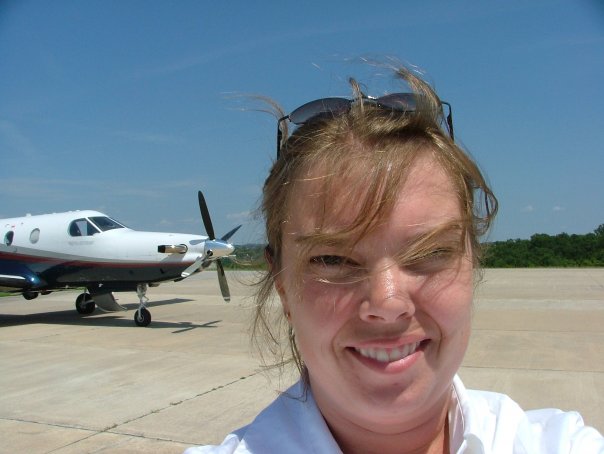
    Seventeen years before I was diagnosed with ADHD, I very briefly got to try my dream job: I was a corporate pilot. (And that picture really was me, not Ai!)

    As a full-time flight instructor at a busy Part 141 university flight program, I was beginning to burn out on the training scene. I had an empty bank account, a mountain of student debt, 2 graduate degrees, and constant drama. A friend of mine, a lanky kid from East Tennessee named Hovan, was working at the local FBO (fixed-base operator, basically the airport office) when a stocky older guy came busting in the door complaining to someone on the phone about his piece-of-shit co-pilot who quit on him short-notice. He didn’t NEED a co-pilot, but they always flew with one as a safety net and to help run the radios and take turns at the controls. He hung up, looked at Hovan and said, “Hey Kid, are you a commercial pilot?” Hovan said, “Dang it I’m working on it, but I know someone who is!” The pilot gave him his card and Hovan immediately called me. And I called cranky John. This is how many aviation jobs work– just be in the right place at the right time. I interviewed the next day and got the job– first officer in a single-engine turboprop Pilatus PC-12! The second pilot in a single-pilot-certified aircraft. Woo-Hoo!!

    It was a Part 91 (private) corporate aircraft that shuttled the big-wigs of a turn-key time-share cleaning company. Condo developments hired them as a fully-staffed cleaning crew package. We flew the executives to tourist traps like Orlando, Branson, Wisconsin Dells, and Myrtle Beach for meetings. Sometimes we flew the boss’s family to vacations in Colorado. On one such trip to Pagosa Springs, John told the family not to buy anything heavy because we were at a high-altitude airport and unless they wanted to make an extra fuel stop on the way home, we were going to be too heavy for takeoff. So what did they show up with on the morning of departure?  A gorgeous, hand-carved, wooden 12-foot tall piece of Native American art that the Missus had to have for her garden. John just looked at the boss and yelled “Really Alan?? A F–KING TOTEM POLE!?” But they loaded it through the cargo door and between the seats, and off we went. Yes, we required an extra fuel stop. John knew them well enough to wait for the refueling order until he saw what showed up.

    The days spent learning to fly that airplane were some of the best and most challenging days of my flying career. John was not an instructor, so he was a bit gruff and sometimes screwed with my head, but I was so interested in the airplane and its systems that I didn’t care. He handed me a giant book of systems diagrams and told me to learn it. I studied the pilot’s operating handbook nightly. I learned the intricacies of operating a turboprop engine, which I had never done before. They are very different from piston engines and highly dependent on… of course… checklist usage. The boss was adamant about me sticking around long enough to justify the cost of my training. The plan was to send us both to Flight Safety International for type-specific PC-12 simulator training– John was to get refresher training, and I was to get fully checked out as Pilot in Command (PIC). I could not wait. 

    In the beginning, I did so well. I was hyper-alert, hyper-aware of the aircraft state, my mind open to learning all the procedures. I remembered when to grab the checklists, read each one aloud, operated all the buttons, switches, dials and controls exactly when called for. I was put in charge of loading the new databases from the Jeppesen online account onto the GPS data cards because John hated doing it. I was also in charge of inserting all the newly-revised paper Jeppesen approach charts into the approach chart binders. We had nationwide coverage, so the library of leather brown binders organized by state was literally scattered in a pile on the floor of the baggage compartment in the tailcone of the airplane. Definitely not ideal… so I had to make sure we had the correct binder within reach up front for each planned flight AND for any potential alternate airports. I dressed to the nines, cleaned up my normally-obscene language, wore makeup, and stood tall & straight as I welcomed our clients on board. I made sure the little drawer full of mini-liquor bottles in the back of the plane was well-stocked and everyone had their favorite snacks. Looking back, it was ADHD hyper-focus and masking at its finest, and I didn’t have a clue in the world.

    That summer, the more we flew, the more comfortable I got with the airplane. John taught me how to wait just the right amount of time before using the de-icing boots to get rid of ice on the wings to make sure the ice was thick enough that it would crack and depart the aircraft – something you never learn in flight school. He taught me how to use NEXRAD digital weather products alongside analog real-time weather radar to determine the safest flight path around storms. He showed me the difference between the sharp, cauliflower-like outline of a building thunderstorm cloud and the soft, wispy edges of a dying one. The more comfortable I got, the more I started to relax. John became a friend. We laughed a lot. He was a funny old American Eagle pilot and he had enough flying stories to last for years.

    But then everything started getting weird. On the day before we were to leave for our sim training, the boss scheduled us for a trip to Orlando. After he had made such a big deal about the cost of the training, I knew he was making a big sacrifice for rescheduling it. It had to be a life-or-death sort of meeting. I was highly disappointed.

    And then, inexplicably my performance started to decline. I started daydreaming on flights. I started forgetting to pull checklists. John had to remind me to do things that I had remembered before with no problem. My flight performance hit a plateau. He told me one time I’d flat-spotted the tires by landing with the brakes on. I still deny that, but the rudder pedals and their integrated brake pedals were also too big for my tiny feet. So, maybe I did? Every landing after that, I was ultra-conscious of where my feet were on the pedals and it was distracting as hell, especially during crosswind landings, which required a lot of rudder. I forgot to adjust the cabin pressure one time on a descent, and the passengers felt it. The doubt started creeping in. I needed to get my shit together. Then one day, John shattered me. He said in a fit of frustration, “I swear this is learned helplessness.” Everything really started going south after that, because not only was I disappointing myself, I was disappointing him. He could see that something wasn’t right, and I didn’t even know what the hell it was. And then the self-doubt just poured in. Instead of focusing on learning the airplane and getting better at flying it, I began to drown in confidence issues. I second-guessed everything. My brain power was sapped. Flying became hard.

    I also had a health scare at the same time. On a routine physical, they found a benign tumor the size of a pack of hamburger on one of my ovaries, and my greenhorn-pilot job’s basic health insurance hadn’t kicked in yet… I had to be employed for 6 months, and I was diagnosed in Month 5. So I was facing the possibility of paying for a surgery that might cost more than my yearly $30,000 salary out-of-pocket. When I took time off to get the surgery, I was still hopeful that I could return to my job, get trained by the professional instructors at Flight Safety, and get over my stupid confidence issues. But shortly after the surgery, on a frigid moonlit night in January, I got a call from one of the VPs who I had flown with often and grown to like. The company was downsizing. It was 2009 and the world financial bust had finally caught up with them. People weren’t buying time shares anymore. Developers were cutting costs. He told me John had fought hard to keep me on, which frankly surprised me, but it was not to be. Tears stung my eyes as I stared up at the ice cold Tennessee moon. The first person to get canned from the flight department is always the co-pilot of a single-pilot aircraft.

    I didn’t know it at the time, but the entire flight department was also on the chopping block. And the boss had clearly known it months before… which is why he had canceled our training. I heard a rumor later on that John had flown the company execs on a trip a few states away, where they informed him that they were selling the airplane and his services would no longer be needed upon returning home. He basically said “Okay then,” and bought himself an airline ticket home, leaving the plane and his former boss stranded. I don’t know if that’s true, but it’s certainly something that old legend would do, and it made me smile.

    My diagnosis of ADHD with rumination OCD has shed so much light on this whole situation. I’ve always been somewhat haunted by what actually made my performance decline. It just didn’t make any sense. I learned the stuff, I enjoyed the stuff, but then all of a sudden, I couldn’t reliably do the stuff! Now I understand that I was in a form of hyper-focus for months, learning the new airplane and its systems and how the job worked. I was in a constant state of learning something that was my dream to do. It was much like school in that it was structured, there was positive pressure to learn and grow, and obviously “deadlines” in days we were scheduled to fly. I grew to enjoy being around John and a few of the people we often flew. It literally was a dream job. And as soon as I began to get comfortable, the ADHD kicked in… my brain started to wander and I lost the intense hyper-focus. I needed that intense focus daily to perform, but my brain just didn’t have it. Part of the problem with commercial flying is that it does become routine and boring after a while. Once you know what to do, the small details become almost tedious minutia. But the routine stuff all needs to be done on time and correctly, every time. As soon as I started losing that focus, my positive pressure– the innate desire to learn and do the things, guided by positive support from John– became replaced with negative pressure– his loss of confidence, the second-guessing, the pressure to just do it right, the feeling of not being good enough. The “seriously, what the fuck is wrong with you?” sort of pressure. Those thoughts, which I now know were exacerbated by rumination OCD, consumed so much brain power that it just funked me out. Like old Maverick after he thought he killed Goose, times 10.

    I didn’t pursue commercial flying after the Pilatus job for several reasons, one of which was just not consistently feeling physically or mentally at my best. I’m grateful for the five months I had flying the Pilatus with John because I got to do my dream job just for a little while. And now I know, in hindsight, that a full-length airline or corporate flying career was likely not in the cards for me anyway, due to undiagnosed ADHD. This brings a very weird sort of emotional relief.